This year, our Secondary Visual and Performing Arts department introduced a new elective for students in Grades 9–12: Fashion Topics. While fashion may not be traditionally associated with college-preparatory academics, the course has quickly become a compelling example of how students learn best—through exploration, collaboration, and purposeful creation.
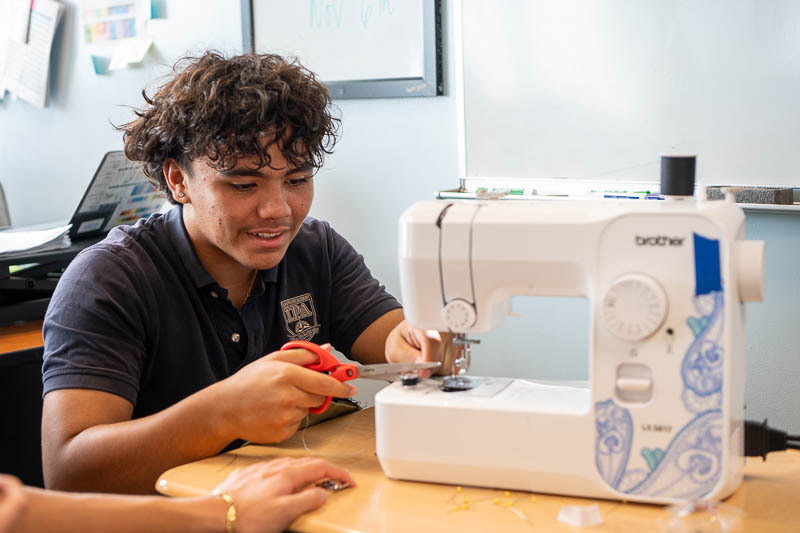
Taught by Secondary faculty member Aiddy Weisbecker, the class encouraged students to view fashion not just as artistic expression, but as a lens through which to explore history, culture, and identity. Alongside developing practical skills in sewing, textile design, and garment construction, students engaged in reflective inquiry about the cultural forces that shape what we wear and why.
“My goal was for students to see the connection between the design choices of the past and how they inform contemporary fashion,” said Weisbecker. “I hope they leave the class with a deep understanding of how history shapes today’s fashion, and that they also gain confidence in their ability to step out of their comfort zone and learn new skills they might not get the chance or the space to learn in other subjects.”
Exploring Fashion Through History: The Decades Project
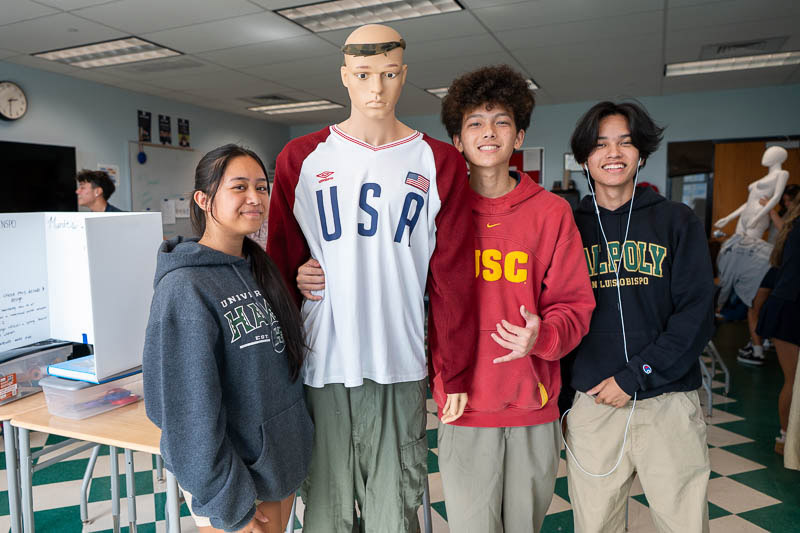
At the heart of the semester was the Decades Project, a multi-week exploration of how fashion reflects, and responds to, the social and cultural attitudes of its time. Students worked in small teams to research a chosen decade, asking questions like: What values did this era express through fashion? How does that compare with today’s style and culture?
“Our fashion curriculum is designed around a project-based framework that encourages creativity, problem-solving, and iteration,” explained Weisbecker. “In the Decades Project students used only recycled materials found at a thrift store, which required them to think creatively, collaborate, and develop sustainable solutions.”
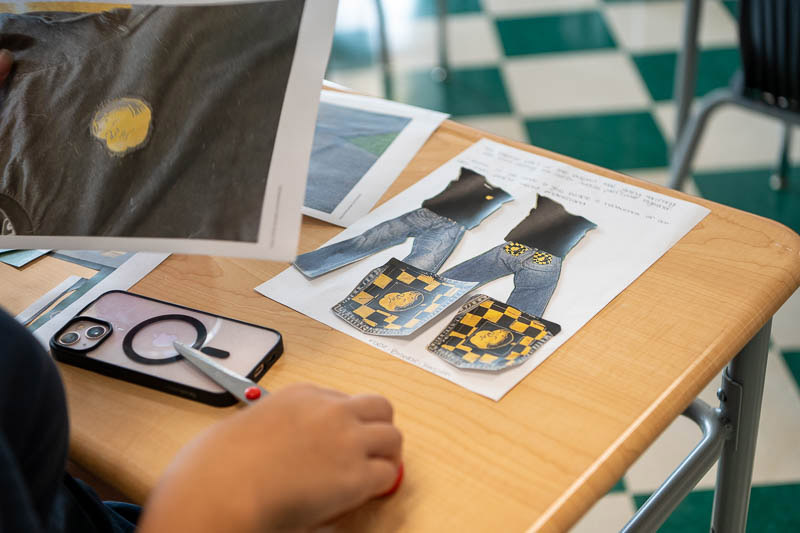
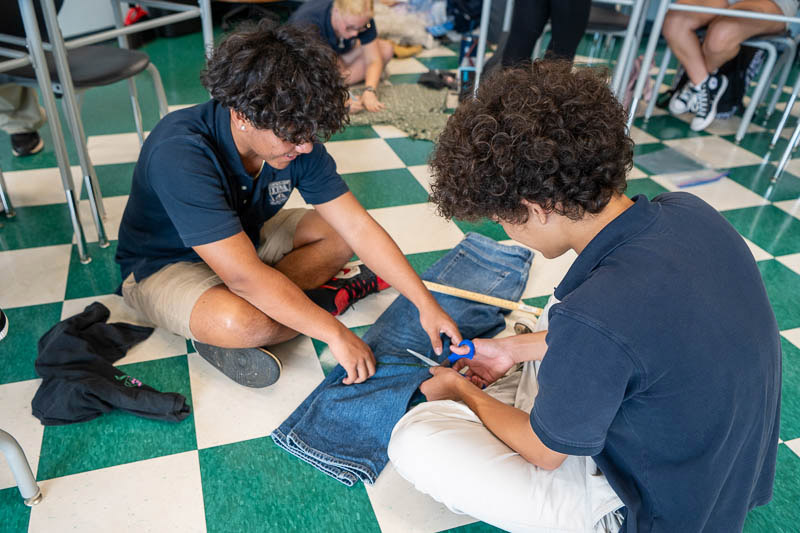
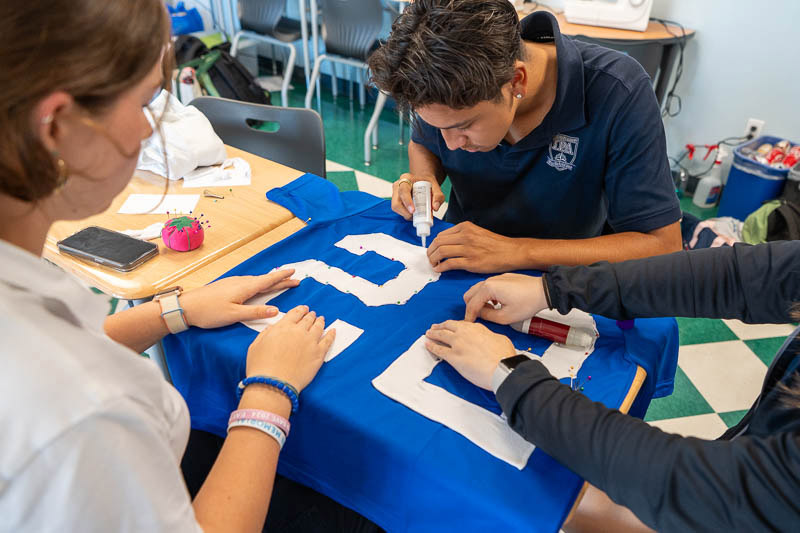
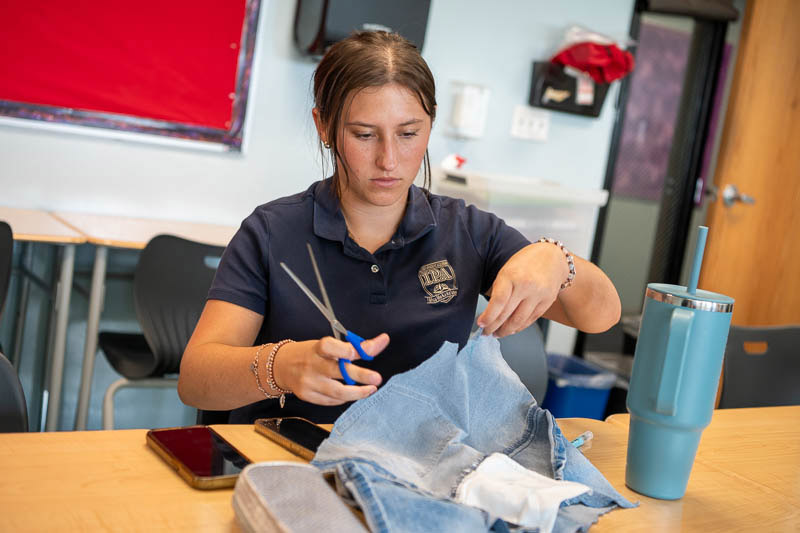
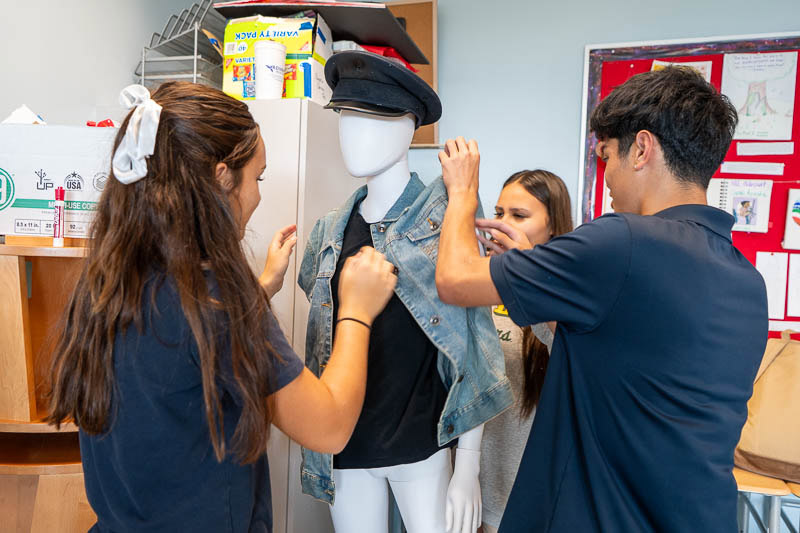
In the creative phase, each student sketched an original outfit inspired by their chosen era, intentionally avoiding stereotypes and caricature. The groups then merged their individual sketches into one cohesive design, planned a materials strategy, and thrifted for secondhand pieces to deconstruct and reimagine. The process became an exercise in creative problem-solving, as students brainstormed, prototyped, and refined ideas while learning to navigate ambiguity and adapt through trial and error.
“We emphasized reusing and repurposing,” said Weisbecker. “They weren’t just putting together pieces they found, they were deconstructing and reconstructing. The process encouraged them to think critically about the environmental impact of fashion while gaining practical skills in fabric manipulation and hand sewing. More importantly, they learned how to turn inspiration into action and work together to bring ideas to life.”
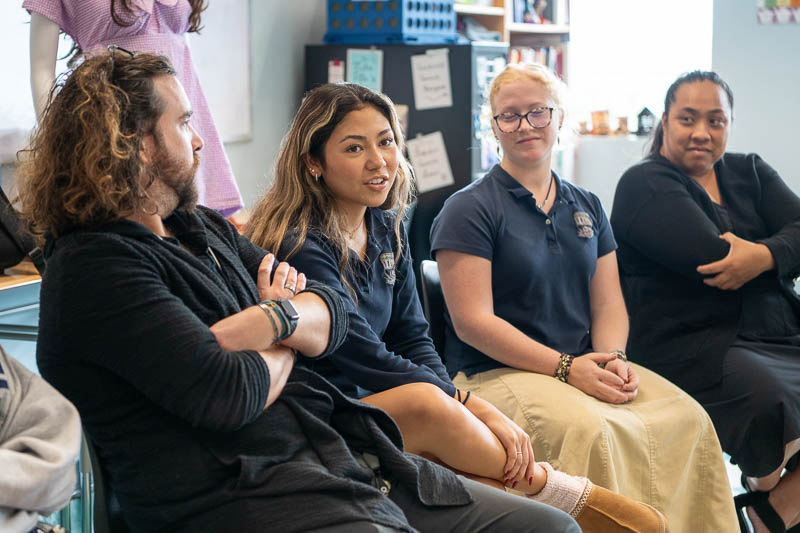
The class also integrated regular moments of reflection. Students documented their creative process with journals and photos, and shared in roundtable-style discussions.
“I liked the freedom we had in being able to create what we wanted,” said Trenton Banquil ‘25. “I really enjoy 90’s hip hop, which is what our entire design was based upon, so I enjoyed being able to create something that I listen to and admire.”
“Our favorite part was figuring out how to do things. We didn’t know how to sew or construct anything, so the best part was making it happen by figuring the challenges out along the way,” shared Caitlyn Bedford ‘26.
“Listening to their experiences in a roundtable activity helped me see their growth, not just as designers, but as critical thinkers and risk-takers,” said Weisbecker.
One of the most meaningful takeaways? A new awareness of sustainability. “After learning about the environmental impacts of the industry, they completely shifted their focus and now many have made it a point to buy second-hand clothes,” she noted. “Students love thrift shopping but now they are deliberately putting emphasis on this practice. It is inspiring to see a shift in their perspective and growth in their passion.”
A Year of Creative Exploration
Beyond the Decades Project, students completed a range of shorter assignments that connected design with culture and self-expression. In one project, they reimagined Santa Claus’s iconic outfit for alternate settings, from a tropical beach to a futuristic city, learning how clothing can reflect character and environment. A unit on the kimono invited students to consider how cultural traditions inform modern fashion, while another project traced the evolution of footwear and its intersection with innovation and commerce.
Each assignment encouraged students to ask thoughtful questions, connect ideas across disciplines, and express themselves with purpose—hallmarks of the kind of learning that lasts.
Skills That Last Beyond the Classroom
Throughout the class, students cultivated much more than design skills.
“Through Fashion Topics, students developed a wide range of soft skills, including critical thinking, problem-solving, collaboration, time management, and communication,” said Weisbecker. “They grew in their ability to give and receive constructive feedback, which is not only valuable in fashion but in any collaborative environment.”
Sarah Onaga ‘25 shared, “What I really liked about this project was that we weren’t worried about making mistakes, because the mistakes made it more interesting and were actually what we used to better our pieces.” This kind of insight emerged naturally as students leaned into the process, learning to view setbacks as part of moving their ideas forward.
Weisbecker also noted how students’ interests evolved as the course progressed. “At the start, many focused primarily on the hands-on portion of the class. As they engaged more deeply with the design process, they start to appreciate the technical skills, historical context, and deeper purpose behind fashion.”
Looking Ahead
Due to high student interest, Fashion Topics will expand to three semester-long sections in the 2025–2026 school year. The course continues to attract students with its blend of creativity, history, culture, and hands-on learning.
“I’m incredibly proud of how the students embraced the creative challenges in the classroom and the sense of community they built together,” said Weisbecker. “One of the things that stands out is the way they supported each other whether it was through peer feedback, collaborating on design ideas, or helping one another troubleshoot technical issues.”